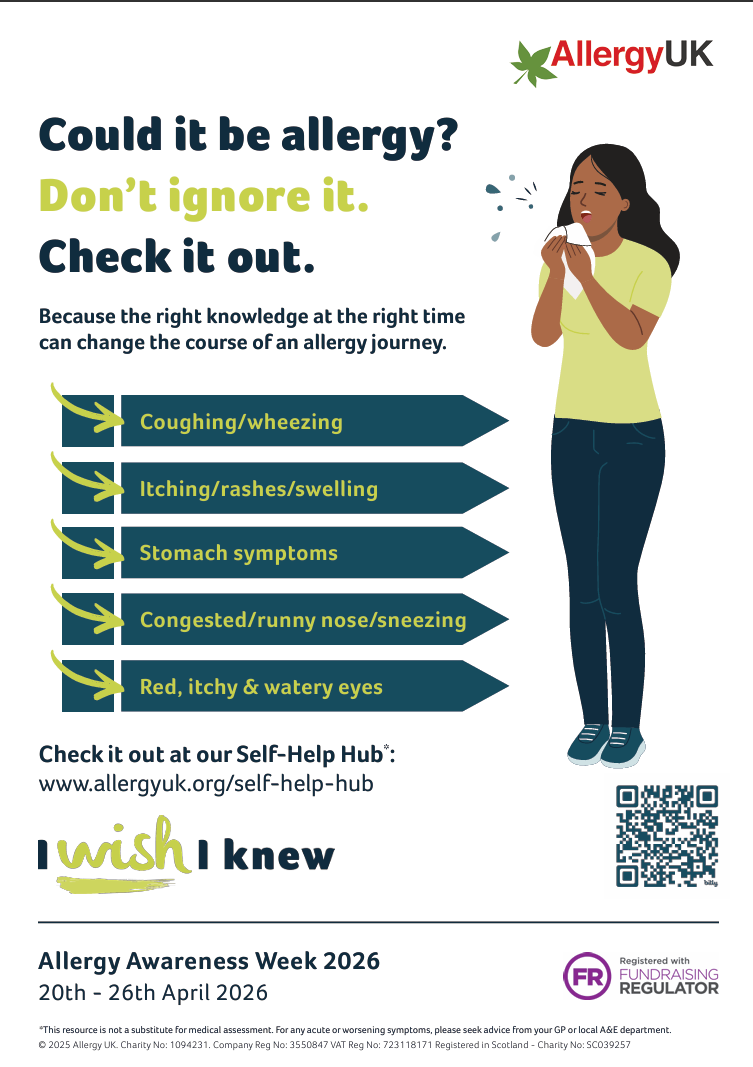
Allergy Awareness Week 2026 is an opportunity to start that conversation, helping more people recognise the signs of allergy, access support sooner, and build a future where allergy is better understood and better managed.
I Wish I Knew… Diagnosis Matters
Allergy affects millions of people across the UK. Despite this, many still struggle to recognise the symptoms or access the support they need. As a result, many people live with allergy symptoms for years without understanding what is causing them or how to manage them safely.
Allergy Awareness Week 2026 continues their “I Wish I Knew” campaign, shining a light on a simple but powerful message: diagnosis matters. Recognising that symptoms may be linked to allergy and seeking a diagnosis is the first step to accessing the right care and taking control.
Throughout Allergy Awareness Week they will be highlighting:
Signs and symptoms of allergic disease
The importance of seeking the right diagnosis
Real experiences of people living with allergy
The support available through their Self-Help Hub
The week also marks an important milestone for the allergy community. During the campaign, the UK’s first National Allergy Strategy will be launched at a parliamentary reception hosted by Allergy UK, setting out a long-term vision for improving allergy care and support across the UK. A key part of this work is around increasing awareness, inclusion and quality of life for those affected by allergy.
Living safely with allergy depends not only on healthcare services, but also on a greater awareness and understanding across society.
Facts about allergies:
Over 30% of adults report adverse reactions to foods, but only a proportion have a confirmed allergy (Food standards agency 2024)
Around 25% of UK children have eczema; these children are more than twice as likely to develop asthma and hay fever, and almost five times more likely to develop food allergy (Chiesa Fuxench et al. J Am Acad Dermatol. 2024)
Fewer than 10% of children with food allergy are seen in a specialist allergy clinic (Turner et al. Lancet Public Health. 2024)
Why does diagnosis matter?
Discover why recognising the signs of allergy and getting the right diagnosis sooner can make all the difference. Learn more about the challenges people face, the impact of delayed diagnosis and why this campaign matters.
Visit the Self-Help Hub
Through the Allergy UK Self-Help Hub, people can access clear information about allergy symptoms, management and everyday living with an allergic disease. For many, this support is the first step in recognising that what they are experiencing may be an allergy and understanding what to do next.
The National Allergy Strategy
Through the National Allergy Strategy Group (NASG), Allergy UK has worked alongside key partners to develop a comprehensive blueprint for improving allergy prevention, diagnosis, treatment and support across the UK.