A Few Words from Mina, our Clinical Pharmacist... 💊💊

By Mina Hunjan, Clinical Pharmacist

By Mina Hunjan, Clinical Pharmacist

A few words from Mina about her new role at St Wulfstan Surgery…

My name is Mina and I'm one of the Clinical Pharmacists at St Wulfstan’s surgery.  I form part of the multi-disciplinary team looking after Care Home residents. 


I've always worked with Care Homes and in my last role, I helped support them through the pandemic.  I have to say that in such challenging times, the dedication and care shown by the carers was so inspiring. I'm sure we are all grateful for their efforts and thankful that Care Homes are becoming more accessible once again.  


The part of my job I enjoy the most is helping the residents understand their medicines and supporting carers and families during medication reviews.  To do this effectively, I spend time at the surgery checking their electronic records for medication lists and dosage, their indications, searching for any interactions and their recent investigations.  Then I arrange visits to Care Homes to discuss resident's medications to find out what they take, their medicine likes and dislikes and if it's working!  When we talk together, it is a great opportunity to hear the resident's ideas, concerns and expectations of their medicines and get the whole picture. Carers and patient’s families are also invited to give their views, meaning we can optimise resident's medicines in a holistic way and sharing the decision-making process. 


At the surgery, we meet in a multidisciplinary team which is led by Dr Viswa, in order to further discuss and optimise our Care Plan. This keeps the health, safety, wellbeing and most importantly of all, the wishes of our residents at the heart of Medicine Reviews and ongoing Care Planning. 


Working together like this is hugely satisfying and a great way to look after our most vulnerable patients. 

🤧 It's Hay Fever Season Again! 🤧

The sunshine has arrived - hooray! But for those of us with hay fever it can be bittersweet.

Hay fever is an allergic reaction to pollen and the symptoms occur or worsen in the Spring and Summer when pollen counts are higher. This can result in sneezing, coughing, a runny or blocked nose, itchy or watery eyes and an itchy throat.


We often get calls about hay fever at this time of year, but recent changes mean that most treatments for hay fever can now be purchased over the counter at your local pharmacy, meaning your pharmacist is often best placed to help.


The treatment of hay fever normally consists of antihistamine tablets, antihistamine eye drops and steroid nasal sprays. If required you can use a combination.

Anti-histamine tablets/syrup

There are several different types available from your pharmacy. If you try one which doesn’t help, then it is worth trying an alternative, unfortunately this often involves some degree of trial and error. Some anti-histamine’s such as Piriton (chlorphenamine maleate) can make you feel drowsy, so there are non-drowsy preparations available, such as cetirizine.

If, despite trying different anti-histamines, your symptoms persist then consider adding in eye drops, or a nasal steroid spray, or both.

Anti-histamine Eye Drops

These can be purchased from the pharmacy and work well where itchy and runny eyes are more problematic. The drug is called sodium cromoglicate.

Nasal Steroid Spray

These can work very effectively helping control your symptoms of hay fever and can be used in conjunction with the above treatments. Nasal steroid sprays can take days or weeks to reach their fullest effect so they are worth persevering with.

What Next?

If the above treatments, when used in combination, have failed to solve the problem, and you have given them a reasonable period of time to work, then please give us a call to discuss further.

Uncertainty, loneliness, anxiety, and social media – how do these relate?

By Ludmila Enticott, Health & Wellbeing Coach

By Ludmila Enticott, Health & Wellbeing Coach

Please read on for the latest article from our Health & Wellbeing Coach, Ludmila.

It is interesting how anxiety seems to creep up these days even for those who do not present with apparently obvious reasons.  There may be several factors we overlook today as part of our normal way of life which might come together to evoke a range of negative feelings and affect our internal balance.

When we constantly had to look for food and engage with the outside world as part of our daily routines, the motivation to live was enough to keep ourselves happy. Making it through to the next day alive meant we had a successful day. Basic needs relating to immediate survival are perceived as very important by our mammal brains and are therefore thoroughly rewarded with the release of ‘happy hormones’. There was a sense of achievement in each day and life was simpler from that angle, albeit much harder in other aspects. Depression does not tend to feature so much when we are heavily involved with our basic survival.

Now, for those living in a world where basic needs are routinely met without much effort, the only other human needs left for our brain to pursue in hope for ‘happy brain chemicals’ are the more complex social needs. This is one of the reasons why the social media craze has taken over the world with virtually no exceptions amongst the many different cultures. It is interesting to think about how this has come to be.

One of the worse things for humans is social isolation. Looking back at our ancestral ways, studies show that humans are not meant to live alone or amongst too many strangers and that is because our chances of survival have always been much better within communities. Today research shows the risk of mortality for most diseases increases by about three-fold for those who are ill and lonely at the same time. The brain gets overwhelmed with fear when it senses we are alone. The perceived danger in the brain is huge when we cannot detect anything like a support network for us.

So, if a support network is so important for the human brain, what about social media? The problems seem to come from how virtual contact differs from real contact. The social media community does not offer the same level of safety & security that humans find in small tight communities where people know each other well and interdepend. This is central to the issue around resilience. As humans, we love stress: we seek adventure, amusement parts, horror films and even PhD’s! But the caveat here is: we welcome stress or challenges when we feel safe and supported. These feelings inform our brain that we have better chances to win and, even if we do not win, somebody will be there to pick us up from the fall. Another point is knowing the stress will be of reasonable duration, not too long lasting or extremely energy consuming. We tend to naturally put ourselves up for challenges when we know we have got our backs covered.

Humans are not wired to face too many strangers in their lifetime because, deep inside us, there are brain mechanisms that link ‘strangers’ with ‘danger’. Social media exposes us to a lot more strangers than it is healthy for our mammal brains. Besides, those relationships based on ‘likes’ do not count to make us feel safe or accepted. Hence, there is no amount of ‘likes’ or ‘Facebook friends’ that seem to be enough. This is especially noticeable for youngsters who associate their self-worth with the amounts of comments, likes or subscribers they have in their YouTube channels for example.  Online relationships, by nature, cannot offer the same level of acceptance we seek to replace since our loss of community life. The need for validation is a constant variable that does not go unnoticed by our brains, even if at a more subconscious level. Interactions charged with this level of vulnerability do not activate the real ‘feel good’ areas of our brain because the areas involved with alert and caution will be active in these situations. The brain is not so convinced these are fully benign interactions because it suspects too many factors as ‘unknown’. As a result, anxiety could creep up even whilst we think we are just having fun.

Although it is not quite so possible to live in small tight communities in the ‘globalised world’, an awareness of this shared human need for community life may help us avoid the pitfalls of technology. It might prevent us from falling prey to a ‘need for connection’ in a world that does not offer the sense of belonging. Online communities can be most helpful when they complement our existing relationships with families and friends without attempting to replace them. The current challenges the world faces could serve to bring back simple but essential ‘human needs’ to centre of stage and inspire us all to pay more attention to the basics. More meaningful positive interactions can start at work, at home and in the wider community, especially as we develop new insights through the adversities we face.  Lastly, it is worth mentioning that the part of the nervous system involved with social engagement is the same one for health, growth, and restoration.

Named GP Changes

Following Dr O’Mahony’s retirement on Friday 4th June we would like to advise that all her patients have been re-allocated to Dr Viswanathan. This is purely an administrative exercise as all patients must be registered with a named GP Partner. This will not affect how or who you book appointments with and you are, of course, free to choose whichever GP prefer to see .

Foods for every need! 🍎

Wiltshire Farm Foods are a company who offer delivery of high quality frozen meals for a variety of needs.

They offer free delivery, and no obligation to subscribe or sign a contract. You can order as often or as little as you like.


The types of meals they offer are extensive! You can browse the meals by ingredient eg. Chicken, Turkey and Duck, by dietary requirement eg. low-fat, gluten-free, free-from, and by size eg. hearty, standard and mini.

They also offer softer food meals for those with swallowing difficulties, which range from level 4 - puree meals, level 5 - minced meals and level 6 soft and bite-sized.


If this is something that may be interesting to you, you can go to their website here, or by phone on 0800 077 3100.


Anxiety - Top Tips From Ludmila...

Please read on for top tips on how to manage anxiety from our Primary Care Network Health & Wellbeing Coach…

Gain awareness to maintain control.

Three simple tips to help keep anxiety at bay:

  1. Rescue the mind with the physical body

    • It is hard to control the mind with the mind. We can use our body as an anchor to get results faster.

    • Physical movement, a walk in nature or simply concentrating on breathing for 60 seconds can help bring us back down when the mind starts to spin faster than we can control.

  2. No time to exercise?

    • Incorporate 1-minute-long movement routines every hour or so when you take a short break from screens and you will have completed your workout by the end of the working day. Squats, sit ups, yoga poses, stretch positions, anything you like will bring movement and flexibility whilst helping to keep the mind in a healthy state. You can do that while you wait for the kettle to boil! It does not matter where, move for 60s every hour or so and you will get some exercise into your life without any need to dedicate special time to it.

    • Experiment for a week and see how you feel at the end. If you like it, keep it up for 6 weeks and you will have incorporated a new healthy habit to keep for life.

  3. How many times do you need to check your social media every day?

    • Beware of the subconscious drive to look at social media apps that keep you hooked to your mobile phone. Give your mind a rest from the constant checking and stick to set times of the day to check your messages. It is frustrating for the brain to go in there and find nothing of relevance. Keep it to the end of the day and you will find all you want at once. It is more rewarding for the brain and a better use of your time. Avoid the repeated empty feeling through the day. Even the downward gaze with the eyes when we are hooked to a phone influences the brain. It is not a coincidence we say ‘things are looking up’ when everything is going well and we feel excited. According to neuroscience, the head position as well as the eye position send signals to the brain.

    • Paradoxically enough, having to wait for results is healthy for the mind. Immediate rewards requiring little or no effort to achieve bring frustration in the long run. The more effort we put in the process to achieve a goal, the more significant the results are for the mind. Easy immediate results chip away at our resilience. This is one of the negative aspects behind video games and social media – they offer immediate short-lived rewards that lead to addictive behaviours. It is a vicious circle and a downward spiral.

Sign up for our weekly e-mail newsletter below to stay up to date with our top tips!

A fond farewell to Dr Grania O'Mahony

In a few weeks my husband Tim and I will be off to Africa with Health Improvement Project Zanzibar. Do have a look at hipz.org.uk to see the great work they do.

Now my retirement from general practice is coming up, I'm feeling emotional about my time as a family doctor.

In no particular order, here are a few of the wonderful things that have made working at St Wulfstan Surgery such a satisfaction, an honour and a privilege:

the hug from a man whose cancer was cured after long and gruelling treatment;  receiving kind presents of cakes and produce from allotments; helping people come off strong painkillers; hearing "I love you" from people who have stopped getting migraines; achieving outstanding results in immunisation and safe prescribing of antibiotics; helping people recover from depression; getting encouragement and support from patients even when I have got it wrong; witnessing families provide amazing love and support to partners and family members in need; being at the bedside when someone's life is near its end.

And last but not least, I am grateful for working with such amazing staff. Thank you.

I do think that being a GP is the best job in the world.

Grania O'Mahony

To stay up to date with our latest news, please scroll below to sign up for our weekly newsletter!

NHS Digital - General Practice Data for Planning and Research Data Collection

NHS Digital

You may have heard about this subject in the media recently.

Essentially, NHS Digital have released a Transparency Notice which gives more details on how the NHS may use your data, saved within GP practices, to aid with healthcare planning and research. You do have the option to opt-out if you so wish.

For full details please visit the NHS Digital Website.

If you have any further queries regarding this please contact NHS Digital by clicking here.


How To Opt-Out

There are 2 methods of opting out.

  1. National Data Opt-Out: NHS Digital will collect data from your GP medical record to use for planning and research, but will not share your data with external organisations. To complete this opt-out please click here.

  2. Type 1 Opt-Out: NHS Digital will not collect data from your GP medical record. In order to opt-out you will need to complete this form, and then return it to the surgery, preferably via e-mail, before 1st September 2021.


According to the NHS Digital website:

“Patient data will be collected from GP medical records about:

  • any living patient registered at a GP practice in England when the collection started - this includes children and adults

  • any patient who died after the data collection started, and was previously registered at a GP practice in England when the data collection started

We will not collect your name or where you live. Any other data that could directly identify you, for example NHS number, General Practice Local Patient Number, full postcode and date of birth, is replaced with unique codes which are produced by de-identification software before the data is shared with NHS Digital.

This process is called pseudonymisation and means that no one will be able to directly identify you in the data. The diagram below helps to explain what this means. Using the terms in the diagram, the data we collect would be described as de-personalised.

NHS Digital will be able to use the same software to convert the unique codes back to data that could directly identify you in certain circumstances, and where there is a valid legal reason. Only NHS Digital has the ability to do this. This would mean that the data became personally identifiable data in the diagram above. An example would be where you consent to your identifiable data being shared with a research project or clinical trial in which you are participating, as they need to know the data is about you.”

Gentle Reminder

At St Wulfstan Surgery we pride ourselves on offering you an efficient service.

As such, and to help us keep offering an efficient service we would like to kindly remind patients to turn up to appointments on time - this applies to both telephone and face-to-face appointments.

Whilst the overwhelming majority of our patients are prompt and on time, we do still suffer the consequences of some who are late or never show up.

The consequences of being late include;

  • Loosing your appointment slot

  • The knock-on effect of delaying appointments for all other patients waiting to see us that day

  • Increased congestion within the practice meaning people may then need to wait outside

  • Increased pressure on staff

The consequences of not turning up or answering the phone mean someone else has missed the opportunity for us to help them.

Of course, sometimes you may not be able to attend an appointment with good reason. In these cases please cancel your appointment via the NHS App, Patient Access or by calling reception as soon as you can.

Help us to keep helping you!

We Are Recruiting...

We Want You

We are looking for 2 new members of staff to join our outstanding team.

We would love to hear from you if you are interested, please see below for further details….

RECEPTION SUPERVISOR

Full time post, 37.5 hours per week

Closing date for applications: 31st May 2021

Please click here fore more information

ADMIN ASSISTANT

Full time post, 37.5 hours per week

Closing date for applications: 31st May 2021

Please click here for more information

Dementia Connect

Dementia Connect is a dedicated service to support anyone living with dementia or caring for someone with dementia, providing personalised advice and practical and emotional support, helping you and your loved ones at all stages of dementia.


Dementia Connect is available online and advisors are available over the phone for a chat and to answer any questions or talk through any difficulties you may have regarding Dementia, this can include:

• Understanding more about how dementia affects you or your loved ones

• Small changes you can make at home to help someone with dementia

• Equipment that can help with daily tasks and maintaining independence

• Support to look after your physical and mental health

• Advice on latest Government Covid 19 guidance

• Connecting with others through technology and take part in online activities from the comfort of your own home

• Other services and support available locally

Please contact Dementia Connect today by phone or email.

Call: 0333 150 3456

(Calls charged at standard local rate)

Email: dementia.connect@alzheimers.org.uk

OPENING TIMES:

Monday to Wednesday: 9 am – 8 pm

Thursday to Friday: 9 am – 5 pm

Saturday to Sunday: 10 am – 4 pm

Find out more about Dementia Connect at: alzheimers.org.uk/dementiaconnect

Dementia Connect is delivered across Warwickshire by Alzheimer’s Society and is free of charge.


If you are caring for a family member or friend

Providing care to someone who could not cope without you can be hard. The Carer Wellbeing Service provides emotional and practical support to help you if you care for someone and can help you to maintain your own health and wellbeing.

The Carer’s Response Emergency Support Service (CRESS) can provide emergency cover should you need to leave the person you care for. The service is available for all carers, including those caring for a person with dementia.

Website: www.carerstrusthofe.org.uk/warwickshire-carer-wellbeing-service/

Call: 02476 632972 (opt 2)

Email: carerssupport@carerstrusthofe.org.uk

OPENING TIMES:

Monday to Friday: 9 am to 8 pm

Saturday: 9 am to 1 pm

Further information for carers is also available at www.warwickshire.gov.uk/carers

For more information about dementia and services that can support you, such as - Dementia Talking Point: A helpful online community, available day or night, where people affected by dementia can ask questions or share how they feel.

Please visit Warwickshire’s Living Well with Dementia website: warwickshire.gov.uk/dementia


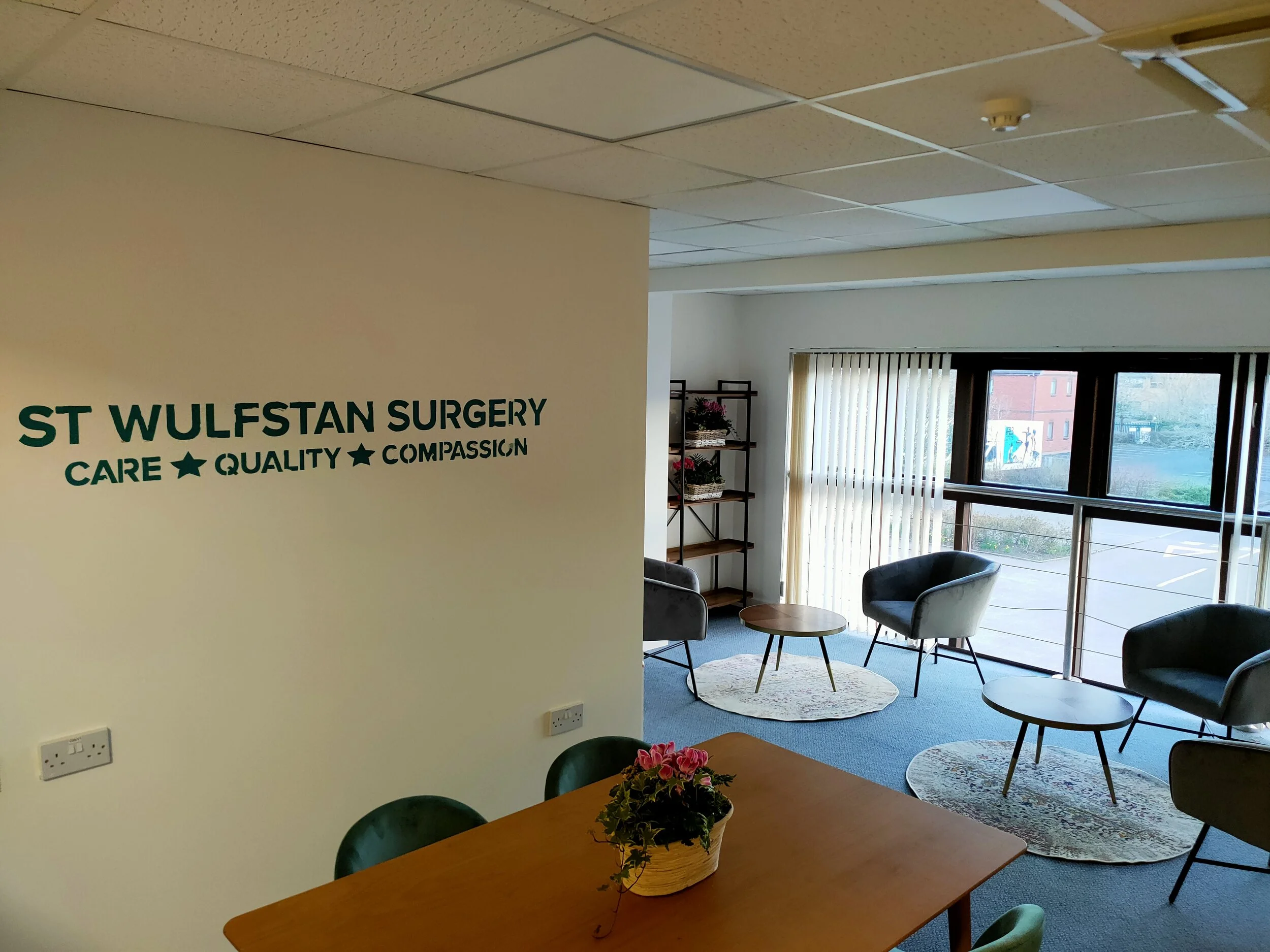
Welcome To Our New Staff Room...

Staff Room

It has been a difficult 12 months for us all. We are so proud of all our staff who have worked so hard to make sure we keep delivering a high quality, efficient service to you all. And believe it or not we are now working harder than ever.

As a result, now is the right time to unveil our new staff room!

To all of our staff, we are proud of you!

If you would like to join our wonderful team, we currently have 2 staff vacancies. We are looking for a full-time Reception Supervisor and full-time Admin Assistant. Please click for more details.

Little Princess Trust


Last week our colleague Jodie’s daughter had those lock down locks chopped! She decided she would like to “share her hair with poorly children” and so her hair was donated to The Little Princess Trust.

When a child loses their hair to cancer, The Princess Trust are there with a free, real hair wig to help. They fund research that they hope will end childhood cancer forever. 

Please visit them at www.littleprincesses.org.uk to find out how you can help and donate yourself! 

Maeve’s initial target was to raise £100 for the charity alongside her hair donation. With the help of her friends and family she has smashed that target and so far raised £340!! As one wig costs over £500 to make, it would be great to see her raise enough to make one wig.

If anybody would like to help her achieve this goal, the link is here.

Well done Maeve! What a kind thing to do! ⭐️👑

Little Princess Trust

A day in the life of our Admin team


Hello! You probably won’t know us by face, but we make up the Admin Team at St Wulfstan Surgery.

Hidden all the way upstairs are Damaris, Sarah, Chris, Jodie, Gemma and Libby. We handle much of the behind the scenes work to your care to ensure your transition from primary to secondary care is as smooth as possible and that the administrative work behind the day to day life of the surgery is maintained to a high standard.

Our tasks are hugely varied – from chasing hospital consultants for updates on your care to comparing printer toner prices for the best deal. We’ve even been known to do a bit of the cleaning  when our resident cleaner has been off!

At the top of our priority list though is anything that involves your direct care. If the GP feels you need to be seen by a hospital or other service, we will ensure that your referral has the right information, is sent to the right place, in the right format and as quickly as possible.  We know that many hospital services have extended waiting times right now so we work hard to ensure that we don’t add to your wait.

We also are responsible for making sure that those of you due any routine checks, blood tests or immunisations are sent an invitation at the right time.  We’re trying hard to reduce our use of paper so you may start to see more of these invitations sent as a text message or email. Please help us out and let us know whenever you change any of your contact details!    

Other tasks we manage as a team include: updating your records with clinic letters and results when you have been seen in hospital, managing paper records when you join or leave the practice, handling information requests from insurance companies, solicitors, DVLA and other third parties…and a whole host of other things that ensure we are kept busy at all times.

We may not be keen on showing our faces but we do love to talk… if you need to discuss anything with us we can be contacted by selecting option 3 on the main number.

If any of the above appeals to you, we are currently hiring a full time admin assistant! If you are interested in applying, please apply via the following link.

Click here to apply!